What Is Diabetes? Symptoms, Causes, Types, Treatment & Prevention Explained
Learn what diabetes is, why it happens, its symptoms, types, diagnosis, treatment, and prevention in simple language. A patient-friendly, evidence-based guide.
Have you recently been told that you have diabetes? Or has someone in your family been diagnosed?
First, don’t panic. Millions of people live healthy, active lives with diabetes. The key is understanding the condition and managing it early. This guide explains diabetes in simple language without confusing medical terms, while staying based on trusted medical evidence.
What Is Diabetes? (Simple Definition)
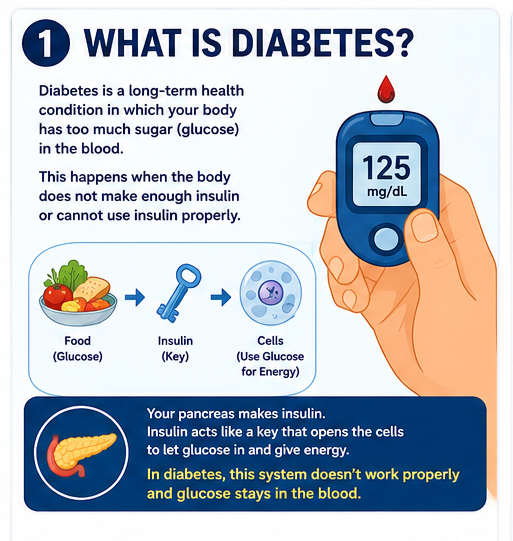
Your body needs glucose (sugar) for energy. Every time you eat, your food is broken down into glucose, which enters your bloodstream.
To move this glucose from the blood into your body’s cells, your body uses a hormone called insulin, which is produced by the pancreas.
Think of insulin as a key.
– Glucose is waiting outside the cell.
– Insulin unlocks the cell.
– Glucose enters the cell and is used for energy.
When this process doesn’t work properly, glucose stays in the bloodstream instead of entering the cells. This causes high blood sugar (high glucose levels), which is called diabetes.
Scientific Definition
Diabetes mellitus is a long-term medical condition in which blood glucose levels remain higher than normal because the body either:
– does not produce enough insulin,
– produces no insulin, or
– cannot use insulin effectively.
Without proper treatment, high blood sugar can gradually damage the heart, kidneys, eyes, nerves, and blood vessels.
How Does Diabetes Happen?
Let’s understand it step by step.
Step 1: You eat food.
Foods like rice, chapati, fruits, milk, and potatoes are converted into glucose during digestion.
Step 2: Glucose enters your blood.
Blood carries glucose throughout your body.
Step 3: The pancreas releases insulin.
Insulin helps glucose enter your body’s cells.
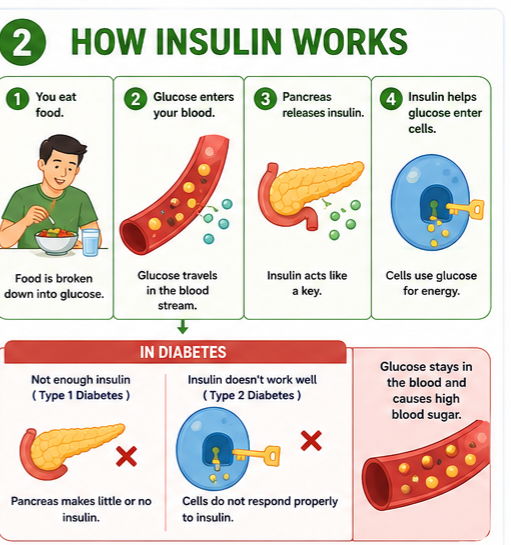
Step 4: Cells use glucose for energy.
This energy allows your body to walk, think, work, exercise, and perform everyday activities.
In diabetes…
This system doesn’t work properly.
Either:
– the pancreas makes little or no insulin, or
– the body’s cells stop responding properly to insulin (called insulin resistance).
As a result, glucose remains in the bloodstream instead of entering the cells.
Types of Diabetes
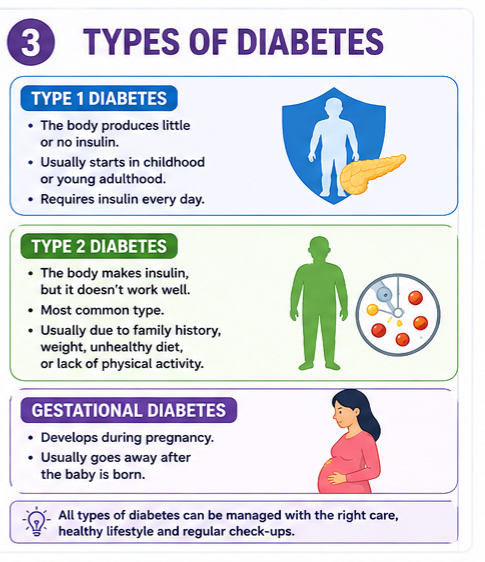
1. Type 1 Diabetes
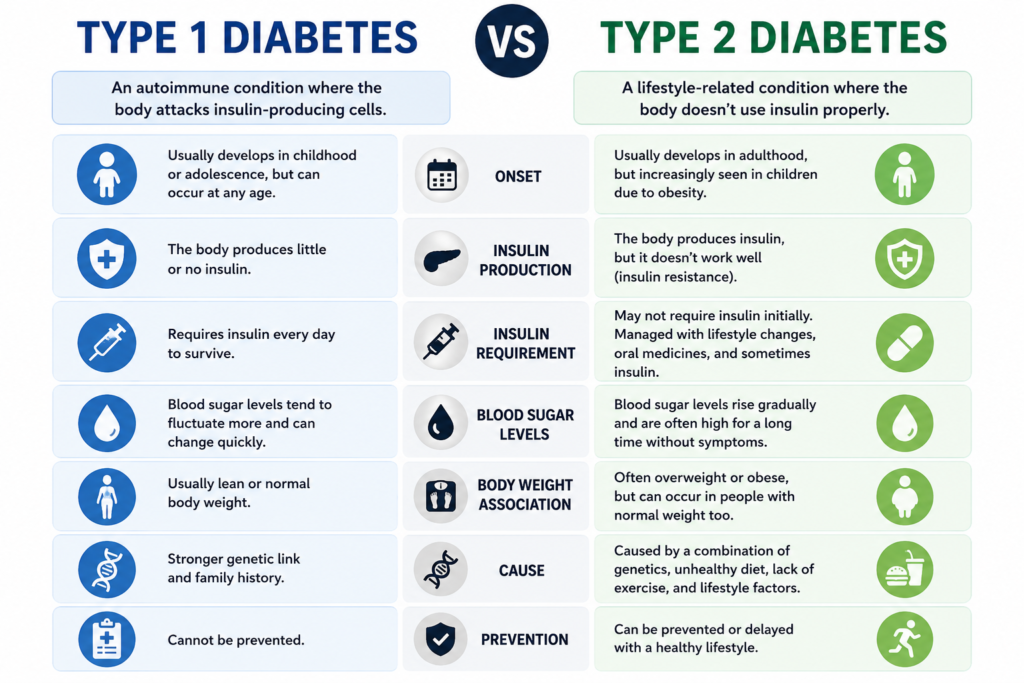
In Type 1 diabetes, the body’s immune system mistakenly attacks the insulin-producing cells in the pancreas.
As a result, the body produces very little or no insulin.
People with Type 1 diabetes need insulin injections every day.
It usually develops during childhood or young adulthood, although it can occur at any age.
2. Type 2 Diabetes
Type 2 diabetes is the most common form of diabetes.
In this condition:
– the body still produces insulin,
– but it cannot use insulin effectively.
This is called insulin resistance.
Risk factors include:
– family history
– excess body weight
– physical inactivity
– increasing age
– unhealthy eating habits
Many people can manage Type 2 diabetes with healthy eating, regular exercise, weight management, medicines, and sometimes insulin.
3. Gestational Diabetes
Gestational diabetes develops during pregnancy.
It usually disappears after delivery, but both the mother and baby have a higher risk of developing Type 2 diabetes later in life.
Regular monitoring during pregnancy is important.
Common Symptoms of Diabetes
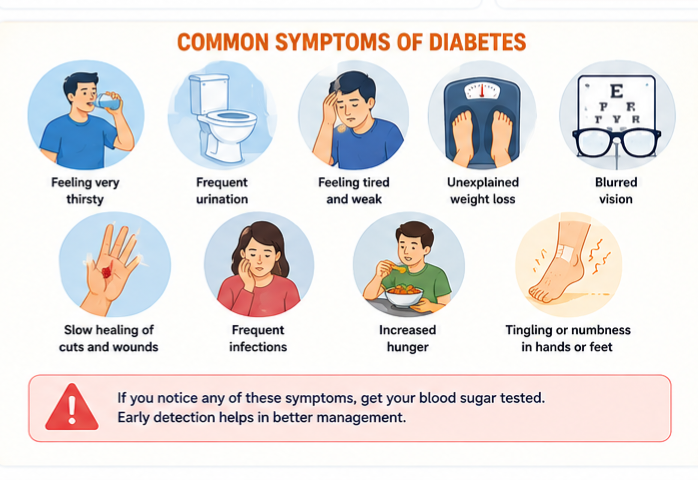
Many people ignore the early signs.
Watch for these symptoms:
– Feeling thirsty all the time
– Frequent urination, especially at night
– Feeling tired or lacking energy
– Unexplained weight loss
– Increased hunger
– Blurred vision
– Slow healing of cuts and wounds
– Frequent skin or urinary infections
– Tingling or numbness in the hands and feet
Some people with Type 2 diabetes may have no symptoms for years, which is why regular blood sugar testing is important.
Who Is at Higher Risk?
You may have a higher chance of developing Type 2 diabetes if you:
– have a parent or sibling with diabetes
– are overweight or obese
– exercise very little
– have high blood pressure
– have abnormal cholesterol levels
– had gestational diabetes during pregnancy
– are over 35 years of age (risk generally increases with age)
Having one or more risk factors does not mean you will definitely develop diabetes, but regular screening is recommended.
Can Diabetes Be Prevented?
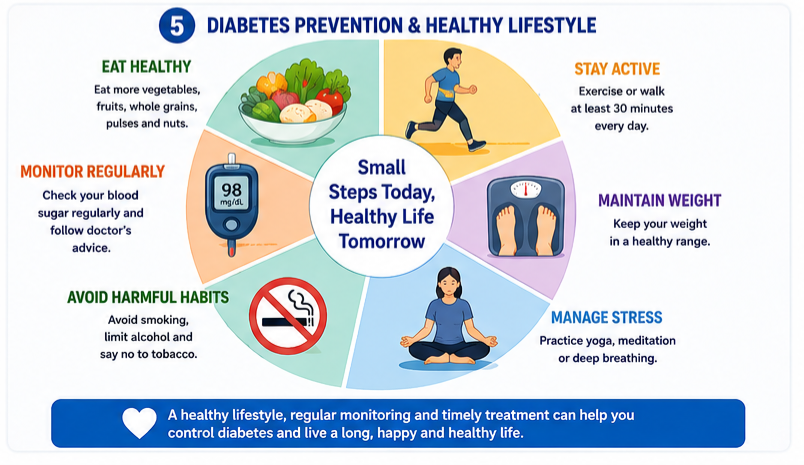
Type 1 diabetes cannot currently be prevented.
However, many cases of Type 2 diabetes can be delayed or prevented through healthy lifestyle habits.
Helpful habits include:
– maintaining a healthy body weight
– walking or exercising for at least 150 minutes per week
– eating more vegetables, whole grains, pulses, and fruits
– reducing sugary drinks and highly processed foods
– getting enough sleep
– managing stress
– avoiding tobacco use
– limiting alcohol intake
Even small lifestyle changes can make a significant difference.
How Is Diabetes Diagnosed?
Doctors usually diagnose diabetes using blood tests such as:
– Fasting Blood Sugar (FBS)
– Post-Meal Blood Sugar (PPBS)
– HbA1c (average blood sugar over the past 2–3 months)
– Oral Glucose Tolerance Test (OGTT) when needed
Your doctor will recommend the appropriate test based on your symptoms and medical history.
Can Diabetes Be Cured?
At present, there is no permanent cure for diabetes.
However, diabetes can be managed successfully.
Many people maintain healthy blood sugar levels through:
– healthy eating
– regular physical activity
– maintaining a healthy weight
– prescribed medicines
– insulin when necessary
– regular medical follow-up
Good diabetes management greatly reduces the risk of complications.
Common Myths About Diabetes
Myth: Eating sweets alone causes diabetes.
Fact: Diabetes develops due to a combination of genetics, body weight, lifestyle, and insulin function. Eating excessive sugary foods can contribute to weight gain, which increases the risk of Type 2 diabetes, but sweets alone do not directly cause diabetes.
Myth: People with diabetes can never eat rice or potatoes.
Fact: Most people with diabetes can enjoy rice, potatoes, and other carbohydrate-containing foods in appropriate portions as part of a balanced meal plan recommended by their healthcare provider.
Myth: Diabetes only affects older people.
Fact: Diabetes can occur at any age. Type 1 diabetes often begins in childhood, while Type 2 diabetes is increasingly seen in younger adults and even adolescents.
When Should You See a Doctor?
Consult your doctor if you experience:
– excessive thirst
– frequent urination
– unexplained weight loss
– blurred vision
– slow-healing wounds
– frequent infections
– persistent tiredness
You should also consider regular diabetes screening if someone in your immediate family has diabetes or if you have other risk factors.
Early diagnosis allows earlier treatment and helps prevent complications.
Key Takeaway
Diabetes is a common long-term health condition, but it does not have to control your life.
Understanding how diabetes works, recognizing its symptoms, getting tested early, and following healthy daily habits can help you live a long and active life.
Knowledge is the first step toward better diabetes management.
Frequently Asked Questions (FAQs)
Is diabetes a lifelong disease?
Type 1 diabetes is lifelong. Type 2 diabetes is usually a long-term condition, although some people can achieve long periods of normal blood sugar through significant lifestyle changes and medical care.
Can diabetes be prevented?
Type 1 diabetes cannot currently be prevented. Many cases of Type 2 diabetes can be delayed or prevented through healthy lifestyle habits.
Which foods raise blood sugar?
Foods rich in carbohydrates, including rice, bread, sweets, sugary drinks, potatoes, and refined flour products, can raise blood sugar. Portion size and meal balance are important.
Is walking good for diabetes?
Yes. Regular walking helps improve insulin sensitivity, supports blood sugar control, and benefits heart health.
Can a person with diabetes live a normal life?
Absolutely. With proper treatment, healthy eating, regular exercise, and routine medical follow-up, most people with diabetes can live long, healthy, and productive lives.
References
This article is based on recommendations and educational resources from internationally recognized organizations, including:
– American Diabetes Association (ADA)
– World Health Organization (WHO)
– International Diabetes Federation (IDF)
– Indian Council of Medical Research (ICMR)
– Ministry of Health & Family Welfare, Government of India
Medical DisclaimerThis article is intended for educational purposes only and should not replace professional medical advice, diagnosis, or treatment. Always consult a qualified healthcare professional regarding your health or any medical condition. Never ignore or delay seeking medical advice because of information you have read online.